From Libraries to the Internet: How Technology Transformed the Way We Access Knowledge
The Digital Evolution: From Library Shelves to a Borderless Internet
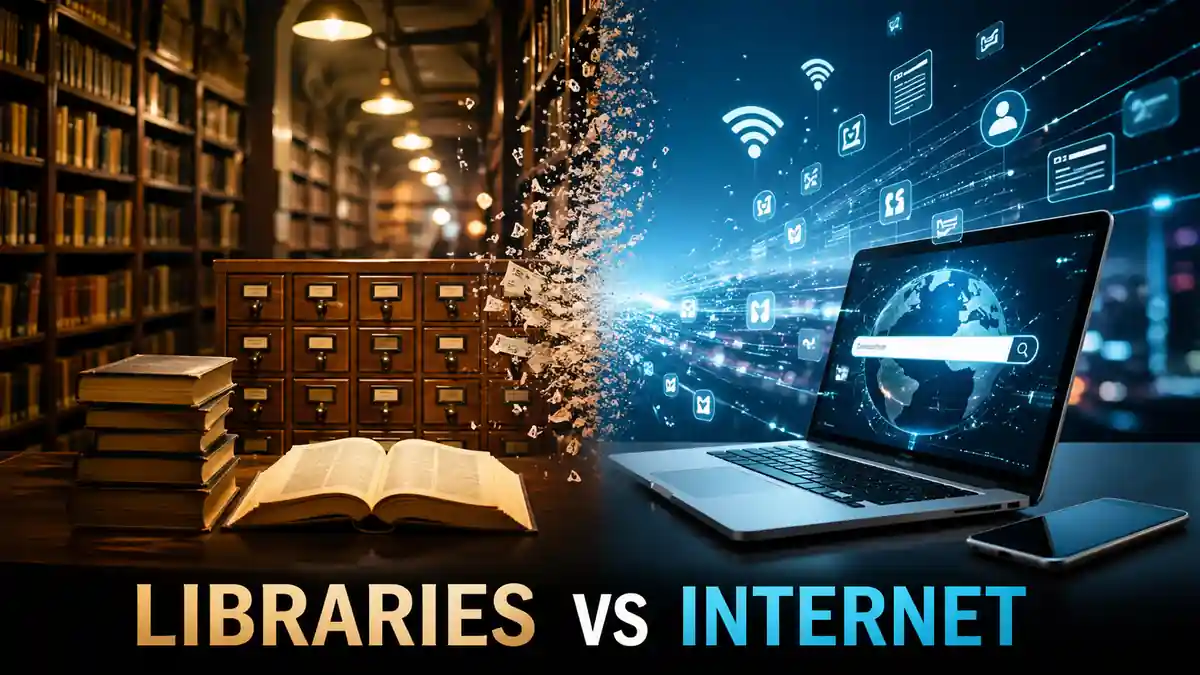
Step into a traditional library for a moment—the quiet atmosphere, rows of neatly arranged books, and the familiar ritual of flipping through a card catalog. Now contrast that with today’s reality: you unlock your phone, type a few words, and within seconds, you have access to millions of sources from across the globe.
This transformation didn’t happen overnight. It’s the result of decades of technological innovation that reshaped how we store, access, and share knowledge. Understanding this journey reveals just how powerful—and transformative—modern technology truly is.
The Era of Physical Libraries: Structured but Limited
For centuries, libraries were the backbone of knowledge. They were carefully organized systems designed to preserve and provide access to information. However, despite their importance, they came with significant limitations.
Organized Knowledge Systems
Libraries relied on structured classification systems to manage vast collections. The Dewey Decimal System played a central role, assigning numbers to subjects and making it easier to locate books.
Card catalogs acted as the search engines of their time. Users had to manually browse through drawers filled with index cards, note call numbers, and physically locate materials on shelves. While effective, the process was time-consuming and prone to human error.
Fragility of Print Media
Books, despite their value, were vulnerable. Paper deteriorates over time due to acid content, environmental exposure, and physical handling. Fires, floods, and other disasters could erase entire collections instantly.
Unlike today’s digital backups, once a book was lost, it was often gone forever. Preservation required constant care, limiting how widely materials could be shared.
Barriers to Access
Access to knowledge was largely determined by location and time. If you didn’t live near a well-stocked library, your options were limited. Operating hours further restricted availability, making it difficult for many people to benefit from these resources.
For countless individuals—especially those in rural or underserved areas—knowledge remained out of reach.
The Rise of Digitization: Bridging the Gap
The mid-20th century marked the beginning of a shift. Libraries and institutions began exploring ways to preserve information and make it more accessible through technology.
Microform and Early Scanning
Technologies like microfiche allowed entire books and newspapers to be compressed onto film. Institutions such as the Library of Congress used this method to archive valuable materials.
Later, scanners converted physical pages into digital formats, reducing the need to handle fragile originals. These early efforts laid the groundwork for modern digital libraries.
Metadata and Digital Indexing
As collections grew digitally, organizing them required a new approach. Enter Metadata—structured information that describes content, such as author names, publication dates, and keywords.
This innovation transformed searching. Instead of browsing shelves, users could type queries and instantly retrieve relevant results. It marked a major leap toward efficiency and accuracy.
Online Catalogs
The introduction of digital catalogs allowed users to search library collections remotely. These systems eliminated the need to physically visit a library just to check availability.
Although users still had to collect physical books, the search process itself became significantly faster and more convenient.
The Internet Revolution: A New Era of Knowledge
The arrival of the internet in the late 20th century changed everything. Information was no longer confined to physical spaces—it became global, dynamic, and instantly accessible.
The Birth of the Web
The creation of the World Wide Web introduced a new way to connect information. Built on technologies like Hypertext Transfer Protocol and HTML, the web allowed users to navigate content through clickable links. just like ai-tools-in-2026/
This non-linear structure made exploration intuitive and interactive, unlike the rigid format of books.
Search Engines and Massive Indexing
Search engines revolutionized how we find information. Companies like Google developed advanced algorithms to index and rank billions of web pages.
Instead of spending hours searching, users could now get relevant results in seconds. The scale is staggering—far beyond what any physical library could ever achieve.
Cloud Computing and Data Resilience
Modern platforms rely on Cloud Computing to store and manage data across multiple servers worldwide.
This means information is not only widely accessible but also highly secure. Even if one server fails, others ensure that data remains available—eliminating the risk of total loss seen in physical archives.
From Gatekeepers to Global Collaboration
The internet didn’t just expand access—it transformed who creates and verifies knowledge.
User-Generated Knowledge
Platforms like Wikipedia allow anyone to contribute information. Articles are continuously updated, reviewed, and improved by a global community.
This collaborative model accelerates the spread of knowledge, though it also requires careful verification to ensure accuracy.
Open Access Movement
Initiatives such as arXiv and Directory of Open Access Journals have made academic research freely available to the public.
This shift removes financial barriers, enabling students, researchers, and curious minds worldwide to access valuable information without cost.
A New Learning Experience: Smarter, Faster, More Personal
Technology has not only changed access to knowledge—it has transformed how we experience it.
Personalized Content
Modern platforms analyze user behavior to recommend relevant content. Whether it’s educational videos or articles, information is tailored to individual interests and needs.
This level of personalization was impossible in traditional libraries.
Multimedia and Interactivity
Today’s content goes beyond text. Videos, infographics, podcasts, and interactive tools make learning more engaging and effective.
Complex ideas can now be explained visually, making them easier to understand and remember.
Learning Without Limits
Mobile technology has removed nearly all barriers to access. With a smartphone, anyone can learn anytime, anywhere.
From online courses to educational apps, knowledge is no longer tied to a physical location. This shift has opened doors for millions, especially in regions that previously lacked educational resources.
Why This Transformation Matters
The journey from physical libraries to the internet represents more than technological progress—it’s a fundamental shift in how humanity shares knowledge.
We’ve moved from limited, location-based access to a world where information is instant, global, and collaborative. This has empowered individuals, accelerated innovation, and expanded opportunities like never before.
However, challenges remain. Misinformation, digital inequality, and data preservation issues continue to shape the future of knowledge.
Final Thoughts
The evolution from library shelves to the internet is one of the most significant transformations in human history. It has redefined learning, communication, and access to information.
As technology continues to evolve, the way we interact with knowledge will only become more advanced. The key is to use these tools wisely—seeking reliable sources, thinking critically, and embracing the endless opportunities the digital world provides.
Because today, your next breakthrough idea isn’t hidden in a distant library—it’s just a search away.



One Comment