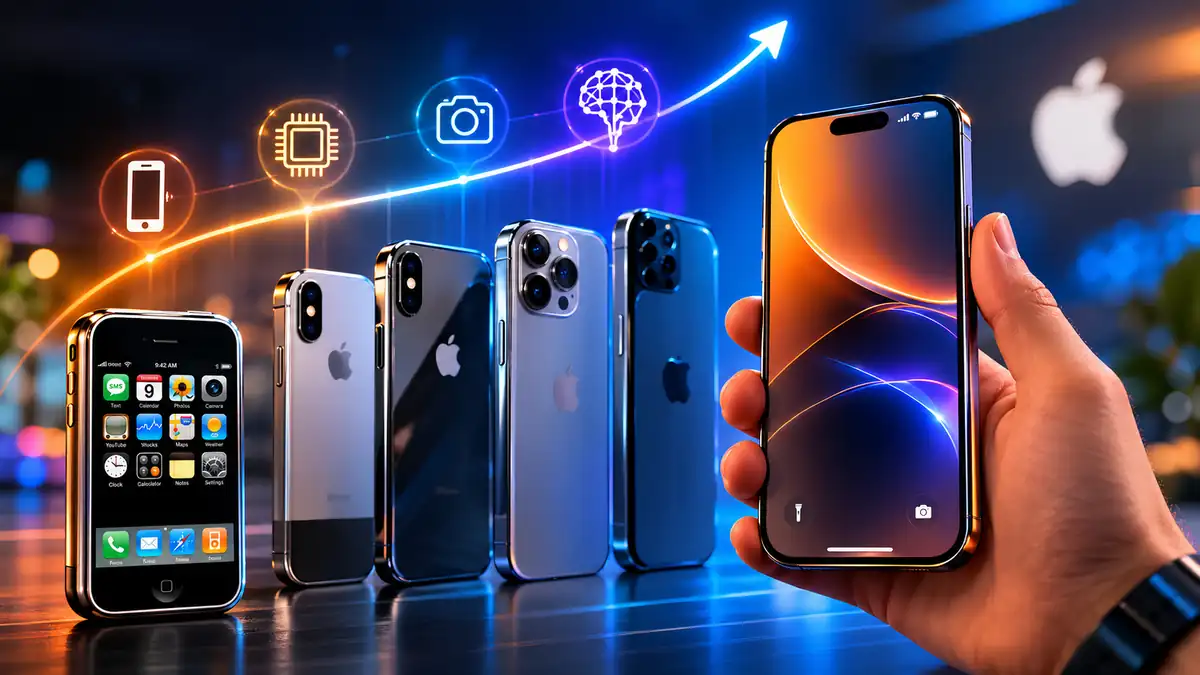
The Quantum Leap: Tracking Technological Evolution from the First iPhone to the iPhone 17 Pro
The Quantum Leap: Tracking Technological Evolution from the First iPhone to the iPhone 17 Pro
In 2007, a glossy black slab with a single button changed personal technology forever. The first iPhone didn’t have an app store, struggled on 2G networks, and could only juggle one task at a time. Yet it felt magical. Fast forward to today, and the latest Pro models stream ultra-high-definition video over 5G, edit cinema-grade footage, and run artificial intelligence directly on the device.
This isn’t a story of small upgrades. It’s a story of how a phone quietly evolved into a pocket supercomputer. By tracing the journey from the original iPhone to the expected iPhone 17 Pro, we can see how advances in chips, displays, cameras, materials, and software reshaped how we live and work.
From Modest Chips to Neural Powerhouses
The early iPhone relied on a simple single-core processor. It was enough for calls, texts, and basic browsing, but anything more would cause visible slowdowns. Today’s Pro models run on the A17 Pro chip, packing billions of transistors across CPU, GPU, and a Neural Engine dedicated to machine learning.
That Neural Engine is what allows modern iPhones to:
- Recognize faces instantly in photos
- Transcribe voice notes offline
- Predict text with surprising accuracy
- Power real-time photo and video enhancements
Apps don’t just open faster; they anticipate what you want. The phone feels responsive not because of raw speed alone, but because it processes context intelligently.
The Network Transformation: From EDGE to 5G
Connectivity tells another dramatic story. The original iPhone crawled on 2G EDGE speeds that made loading a webpage feel like dial-up internet. The arrival of 4G LTE turned iPhones into portable streaming devices. Then 5G pushed speeds into the gigabit range, enabling cloud gaming, smooth video calls, and instant downloads.
This shift changed user behavior:
- YouTube moved from desktop to pocket
- Remote work became practical from anywhere
- AR apps became viable without lag
Rumors suggest the iPhone 17 Pro may be engineered with early readiness for 6G research bands, preparing for even lower latency communication.
RAM and Storage: Quiet Heroes of Multitasking
Early models had just 128 MB of RAM. Switching apps meant restarting them. Today’s Pro iPhones carry many gigabytes of memory, allowing heavy multitasking—editing 4K video while messaging and browsing without stutter.
Storage evolved from a tiny 4 GB option to up to 1 TB of ultra-fast NVMe storage. This enables:
- Instant file transfers
- Large ProRAW photo libraries
- On-device editing of massive video files
The iPhone is no longer a consumption device; it’s a creation machine.
Displays: From Basic LCD to ProMotion OLED
The first screen was a 3.5-inch LCD with limited brightness and color accuracy. The introduction of Retina displays made text razor sharp. OLED panels later delivered deep blacks and vibrant colors.
With ProMotion 120Hz refresh rates, scrolling feels fluid and gaming feels responsive. Outdoor visibility improved dramatically with peak brightness levels that cut through sunlight. Watching HDR content now rivals dedicated televisions.
Cameras: The Rise of Computational Photography
The original 2-megapixel camera had no autofocus, no flash, and no zoom. Today’s multi-lens systems combine wide, ultra-wide, and telephoto cameras with powerful software like Deep Fusion and the Photonic Engine.
This combination allows:
- Stunning night photography without a tripod
- Cinematic video with background blur
- ProRAW files for professional editing
- Automatic scene optimization in real time
It’s no longer about megapixels. It’s about how software and hardware work together to produce images that rival dedicated cameras.
Spatial Awareness: Face ID and LiDAR
Security and augmented reality took a leap with Face ID, powered by the TrueDepth camera system. Your face became your password, even in darkness.
Later, LiDAR scanner arrived in Pro models, enabling:
- Faster autofocus in low light
- Accurate room measurements
- Immersive AR applications
These features hint at Apple’s broader ambitions in spatial computing.
Design Evolution: Slimmer Bezels, Stronger Bodies
From thick bezels and a physical home button, iPhones evolved into edge-to-edge displays with the introduction of the notch and later the Dynamic Island. Screen sizes grew, but bezels shrank, keeping devices manageable.
Material science played a key role:
- Tougher front glass with Ceramic Shield
- Frames shifting from aluminum to stainless steel to titanium
- Improved drop resistance and lighter builds
These changes mean modern iPhones survive drops that would have shattered earlier models.
The Port Journey: 30-Pin to USB-C and Beyond
The bulky 30-pin connector gave way to Lightning, and recent models adopted USB-C. This allows faster charging and data transfer, aligning iPhones with global standards.
Speculation suggests the iPhone 17 Pro could move toward a port-less design, relying entirely on wireless charging and data transfer through MagSafe and cloud syncing.
iOS: From Simple Touch UI to Intelligent Assistant
The launch of the App Store transformed the iPhone from a phone into a platform. Multitasking, widgets, privacy controls, and automation through Shortcuts matured the experience.
Siri evolved from answering simple questions to understanding context and triggering complex automations. On-device AI ensures many of these actions happen without sending data to the cloud, protecting privacy.
Pro Features for Creators and Professionals
Pro models introduced tools once reserved for desktops:
- ProRAW and ProRes video
- Advanced editing apps
- Seamless file sharing across Apple devices
The ecosystem—Mac, iPad, Watch—works as one. Start editing on your iPhone, finish on your Mac without friction.
Looking Ahead: What the iPhone 17 Pro May Bring
Based on current trends, the iPhone 17 Pro could push three major frontiers:
Spatial Computing Integration
Deeper ties with Apple Vision Pro may turn the iPhone into a controller for augmented environments, blending physical and digital spaces.
Next-Gen Display Technology
Under-display sensors could remove visible cutouts entirely. Advanced haptics might simulate real button feedback on a flat surface.
Sustainable Efficiency
Future chips built on smaller fabrication processes promise longer battery life with less heat. Increased use of recycled materials may make the device one of the most environmentally responsible smartphones ever built.
A 17-Year Transformation That Redefined a Device
What began as a stylish phone with a touchscreen became a powerful personal computer, a professional camera, a creative studio, and a gateway to augmented reality.
The journey from the first iPhone to the iPhone 17 Pro shows a pattern: Apple doesn’t just add features—it compounds innovations year after year until the device feels entirely new.
If you’re holding an older iPhone today, this evolution is worth reflecting on. The difference isn’t just speed or camera quality. It’s how the device fits into your life—helping you work, create, communicate, and explore in ways that were unimaginable in 2007.
The next leap is already forming. And if history is any guide, the iPhone 17 Pro won’t just be an upgrade. It will be another turning point.