Apple Glasses: The Hidden Tech That Could Change Reality Forever
Learn more about the powerful technology behind Apple Glasses, from micro-LED displays to advanced AR sensors. See how Apple’s next big innovation could transform how you live, work, and interact with the world.
Apple Glasses and the Future of Augmented Reality: A Deep Dive Into the Tech Shaping Tomorrow
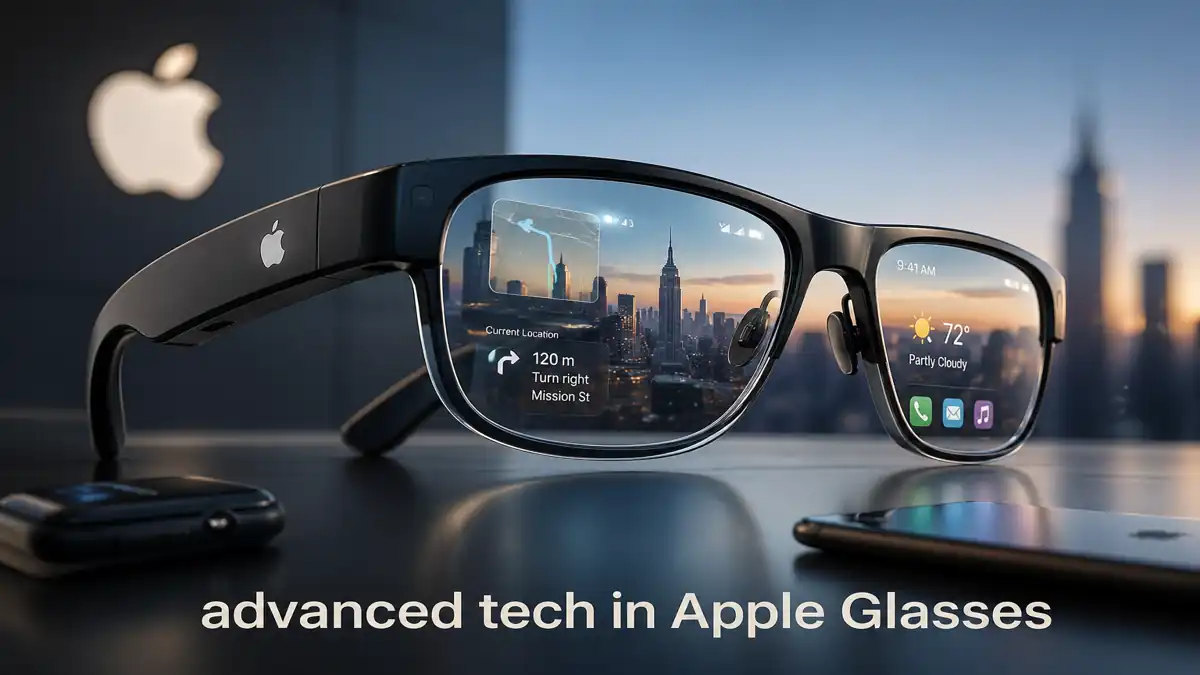
The idea of wearing lightweight glasses that enhance your reality is no longer science fiction—it’s quickly becoming one of the most anticipated shifts in consumer technology. Apple’s rumored entry into augmented reality (AR) eyewear is generating intense interest, not just because of the brand behind it, but because of what it represents: a new computing platform that could redefine how we interact with the world.
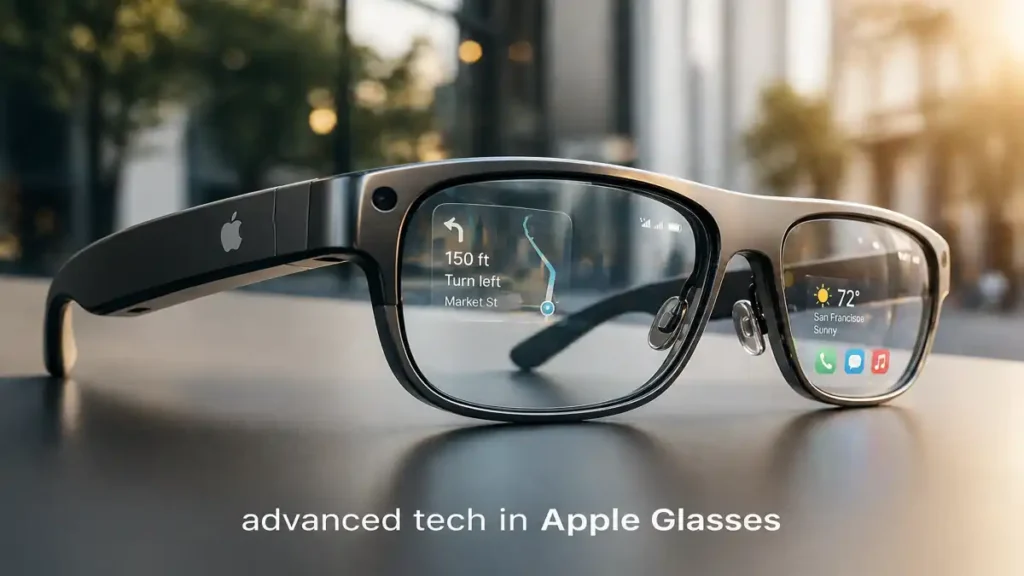
If smartphones put the internet in our pockets, AR Apple Glasses aim to place digital intelligence directly in our line of sight—seamlessly, constantly, and naturally. But making that vision real requires a complex blend of advanced hardware, intelligent software, and thoughtful design. Let’s explore the technology expected to power Apple Glasses and how it could unlock AR’s full potential.
A New Kind of Display: Seeing Without Disconnecting
At the core of AR Apple Glasses is the ability to overlay digital content onto the real world without blocking it. This is far more difficult than it sounds. Unlike VR headsets, which replace your vision entirely, AR must enhance reality without interfering with it.
Apple is expected to rely on a combination of micro-LED displays and waveguide optics. Micro-LED panels are incredibly small, energy-efficient, and bright enough to remain visible even in direct sunlight. This matters because AR Apple Glasses content must compete with real-world lighting conditions.
Waveguides then channel that light through transparent lenses into your eyes. Instead of projecting images directly like a screen, they bend and guide light so digital elements appear as if they exist in your environment. The result is a clean, natural view where directions, messages, or visuals feel embedded in reality.
The real innovation lies in making all of this invisible to the user. You shouldn’t feel like you’re looking at a display—you should feel like the world itself has become interactive.
Visual Clarity: Field of View and Resolution
Two key factors define how immersive AR feels: field of view and resolution.
A wider field of view allows digital elements to occupy more of your vision without requiring you to turn your head constantly. Current AR devices are limited, but Apple is expected to push toward a broader viewing angle that feels more natural and less constrained.
Resolution is equally important. Low-resolution AR Apple Glasses creates a grainy “screen door” effect, where pixels become visible and break immersion. High-resolution displays—potentially approaching 4K per eye—would allow text to appear crisp and objects to look realistic.
Balancing these two factors is one of the biggest engineering challenges. Higher resolution and wider views require more power, more processing, and better thermal control. Apple’s advantage may lie in how well it integrates all these elements into a smooth, cohesive experience.
Apple Glasses Eye Tracking: Smarter, More Efficient Rendering
One of the most powerful technologies expected in Apple Glasses is eye tracking. Tiny infrared sensors monitor where your eyes are focused in real time. This enables a technique called foveated rendering.
Instead of rendering the entire scene in high detail, the system only sharpens the area you’re directly looking at. Everything else remains slightly less detailed—just like natural human vision. This dramatically reduces processing load and saves battery life.
Eye tracking also improves interaction. Instead of tapping or swiping, you could simply look at an object and perform a gesture or voice command. It turns your gaze into a control mechanism, making AR Apple Glasses feel intuitive rather than mechanical.
Apple Glasses Custom Silicon: The Brain Behind the Experience
Powering all of this requires serious computing capability—but within an incredibly small form factor. Apple is expected to develop a dedicated chip specifically for AR Apple Glasses, optimized for real-time spatial computing.
This chip would handle tasks like:
- Mapping the environment in 3D
- Recognizing objects and surfaces
- Processing gestures and voice commands
- Rendering AR visuals with minimal delay
Low latency is critical. Even slight delays between movement and visual updates can cause discomfort or break immersion. Apple’s chip design will likely prioritize speed and efficiency, ensuring responses feel instant.
By keeping much of this processing on-device, Apple can also enhance privacy and reduce reliance on cloud computing.
Staying Cool: Thermal Challenges in a Tiny Frame
Packing powerful hardware into glasses introduces a major challenge: heat.
Unlike smartphones or laptops, AR can’t rely on fans or large cooling systems. Everything must be managed passively. Apple is likely exploring advanced materials such as graphite layers and heat-dissipating alloys to spread warmth evenly across the frame.
Smart power management also plays a role. The system can reduce performance slightly during less demanding tasks to prevent overheating. The goal is to keep the glasses comfortable to wear for extended periods—because even the most advanced tech fails if it becomes physically uncomfortable.
Natural Interaction: Beyond Touchscreens
AR glasses require entirely new ways of interacting. Apple is expected to move away from traditional inputs and embrace more natural methods.
Gesture Recognition
Built-in cameras can track hand movements in 3D space. You might pinch your fingers to select an item, swipe in the air to scroll, or point at something to interact with it. These gestures mimic real-world behavior, making the learning curve minimal.
Voice Control
Advanced microphones with noise isolation allow you to issue commands even in busy environments. Whether sending messages or searching for information, voice becomes a primary input method.
Intent Awareness
Future systems may go even further by predicting what you want to do. Subtle cues—like where you’re looking or how you’re moving—could trigger suggestions or actions automatically. This reduces the need for constant input and makes the experience feel almost effortless.
Understanding the World: Sensors and Spatial Mapping
For AR to feel real, the device must understand its surroundings in detail. This is where sensor fusion comes in.
Apple Glasses are expected to combine multiple technologies:
- LiDAR scanning for precise depth measurement
- Time-of-flight sensors for fast distance calculations
- High-resolution cameras for visual context
- Motion sensors for tracking movement
Together, these systems build a live 3D map of your environment. This allows digital objects to stay anchored in place, interact with real surfaces, and respond to changes in lighting or movement.
Behind the scenes, advanced algorithms continuously update this map, ensuring accuracy as you move through different spaces.
Connectivity: Extending Power Beyond the Device
Even with powerful onboard processing, AR glasses benefit from external support. High-speed wireless technologies like Wi-Fi 7 enable rapid data transfer, allowing complex tasks to be offloaded to nearby devices or cloud servers.
This hybrid approach means the glasses can remain lightweight while still delivering high-performance experiences. Your smartphone, for example, could act as a companion device, handling heavier workloads when needed.
Battery Life: The Practical Limitation
Battery life remains one of the biggest constraints in AR development. Slim frames limit how much power can be stored, forcing careful trade-offs.
Early versions of AR glasses may offer:
- A few hours of intensive use
- Extended standby modes for all-day wear
To maximize battery life, users will need to adopt smart habits, such as lowering brightness, limiting heavy applications, and using energy-saving modes.
Wireless charging solutions are also expected to play a role, making it easier to top up power throughout the day without cables.
The Bigger Picture: A New Computing Era
Apple Glasses are not just another gadget—they represent a shift toward ambient computing, where technology fades into the background and becomes part of everyday life.
Imagine:
- Navigation directions appearing directly on the road ahead
- Real-time translations during conversations
- Virtual workspaces floating in your living room
- Interactive entertainment blending with your surroundings
The success of AR glasses will depend on how seamlessly they integrate into daily routines. If done right, they won’t feel like a device you use—they’ll feel like an extension of how you experience the world.
Final Thoughts
The race toward practical augmented reality is heating up, and Apple’s approach could set the standard for years to come. By combining advanced displays, custom silicon, intelligent sensors, and natural interaction methods, Apple Glasses aim to make AR not just impressive—but truly usable.
The real breakthrough isn’t just the technology itself—it’s how invisible that technology becomes.
As AR evolves, one thing is clear: the next major computing platform won’t sit in your hand. It will sit on your face—and change how you see everything.